IQ Testing
What is intelligence (IQ) testing?
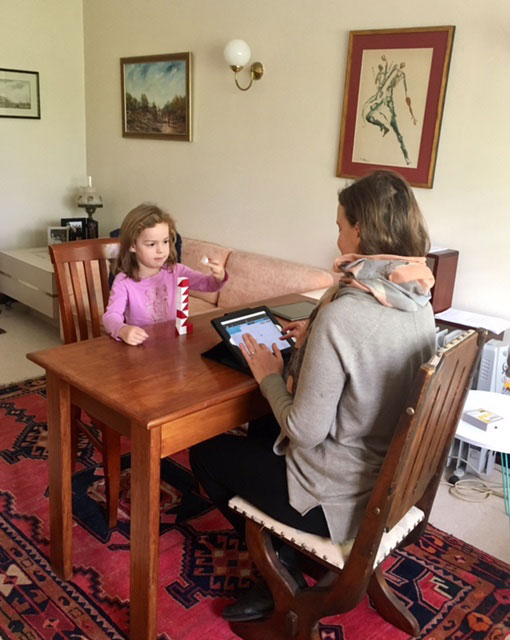
Intelligence testing is a method used by Clinical Psychologists to measure a child's intellectual capabilities in several specific domains. These domains include verbal comprehension, factual knowledge, abstract reasoning, visual-spatial abilities and short-term memory. Intellectual assessment is a good indication of a child's academic potential. The results of an IQ test rank a child against a very large sample of children the same age. If a child scores in the top 5% for their age group it is reasonable to expect them to be performing within the top 5% academically.
The Wechsler tests for children are the most common individually administered IQ tests. They currently include the WISC-V and the WPPSI-IV. During the testing session a child is asked to solve problems and puzzles and to answer questions about the world. The majority of children enjoy the testing session as it is an engaging process involving novel and fun tasks.
What is academic testing?
Academic testing involves an assessment of your child's level of academic achievement and the extent of their learning within an educational setting. Testing will help to determine whether your child has achieved the age/grade appropriate skills in reading, writing, mathematics, and oral language skills. Upon testing some children perform far above their same age/grade peers (gifted), whereas others underperform which may indicate learning difficulties (Specific Learning Disorder). In some cases gifted children underachieve academically, which can also be identified in this process.
What is emotional/behavioural testing?
We use questionnaires (parent/teacher/child), a clinical assessment, various neuropsychological tests, and observations in the testing session to explore emotional and behavioural difficulties in children and adolescents that may be impacting their academic/cognitive functioning. Some parents may have noticed their child exhibiting academic or personal problems at home or at school. A bored, gifted child may be showing their frustration by being disruptive in school, refusing to do homework, or displaying anxiety and/or negative moods. Similarly, children with learning difficulties often show their frustration through disruptive behaviour and/or negative moods. Alternatively, the child may have mood or anxiety difficulties or a neurodevelopmental condition (e.g., ADHD) which is impacting on their cognitive and academic functioning.
Why have your child tested?
Objective nature of IQ tests - If a child's teacher does not recognise their ability level there may be a need to provide objective documentation of their learning capacity. A report is very useful to share with teachers, so that the parents' opinion is not perceived as biased. A gifted child may miss out on being identified unless an independent IQ test is administered.
Access to educational options - Often IQ testing qualifies children for special educational programs that are only available to students with a demonstrated IQ level in the gifted range. Such educational options include enrichment, extension, acceleration, and mentor programs.
Uncharacteristic behavioural/emotional issues - If a child is bored and under challenged in the classroom there may be a significant discrepancy between their ability level and the ability level of their class-room peers. A bored, gifted child may be showing their frustration by being disruptive in school, refusing to do homework, or displaying uncharacteristic behaviour or emotions. Often very bright children underachieve in order to fit in with their peers. It is helpful to identify giftedness as soon as possible so that a child's environment can be adapted successfully to best fit their ability.
Understanding your child's preferred learning style - Many times parents simply want to understand more about their child's abilities - their cognitive strengths and weaknesses, and preferred learning style (e.g., visual versus verbal learners).
To assist with assessment for neurodevelopmental disorders (e.g., ADHD or Specific Learning Disorders in reading, writing, or mathematics).

Tests Used
IQ Tests:
For children over 6 years: The Wechsler Intelligence Scale for Children, Fifth Edition is an individually administered instrument for assessing the cognitive ability of children (age range: 6 years - 16 years, 11 months). The WISC-V is one of the most reliable and valid IQ testing instruments available. It is the most widely used measure of IQ for school placement.
The WISC-V provides scores that represent intellectual functioning in five specified cognitive domains: Verbal Comprehension, Visual Spatial Reasoning, Fluid Reasoning, Working Memory, and Processing Speed. The WISC-V also provides a Full Scale IQ score measuring general intellectual ability. Our Service currently uses the recently updated Wechsler Intelligence Scale for Children - Fifth Edition, - Australian Standardisation (WISC-V Australian), released in 2016.
For children under 6 years: The Wechsler Preschool & Primary Scale of Intelligence - Fourth Edition, Australian Standardisation (WPPSI-IV Australian) is an individually administered instrument for assessing the cognitive ability of children (age range: 2 years, 6 months - 7 years, 3 months). As with the WISC-V, the WPPSI-IV is one of the most reliable and valid IQ testing instruments available.
The WPPSI-IV provides scores that represent intellectual functioning in five specified cognitive domains: Verbal Comprehension, Visual Spatial, Fluid Reasoning, Working Memory, and Processing Speed. The WPPSI-IV also provides a Full Scale IQ score measuring general intellectual ability.
Academic Tests:
The Wechsler Individual Achievement Test - Third Edition - Australian (WIAT-III) assesses academic achievement skills in children from the age of 4 years through to 19 years. Key subtests include spelling, reading comprehension, and numerical operations.
Emotional/Behavioural & Neuropsychological Tests:
We screen for a broad range of behaviors, emotions, and social problems in children aged 6 to 18 years using the Conners Comprehensive Behavior Rating Scales (CBRS). The CBRS is helpful when information regarding a number of childhood disorders and problem behaviours is desired. There is a self-report questionnaire (children 8-18 years), as well as a parent and teacher questionnaire (children 6-18 years). The CBRS is one of the most reliable and accurate measures to identify children with various difficulties, including ADHD.
In addition, we use the NEPSY II, a developmental neuropsychological assessment, to assess the child's cognitive functioning in further depth in areas related to academic difficulty such as their attention, problem solving, memory and learning.
Testing Process
The first step in the evaluation process occurs when you initially speak with our Clinical Psychologist who will offer relevant information and provide you with an initial assessment form to complete as well other relevant measures/questionnaires to be completed by parents and teachers. A time is then set to administer the test which takes on average 60-90 minutes in duration. After the testing session is completed a comprehensive written report is sent to parents outlining findings and recommendations based on the assessment.
The Report
The report is not written by a computer program but rather by an experienced Clinical Psychologist. It provides objective verification of a child's needs and thoroughly outlines all the results in the test, highlighting test scores which indicate giftedness. Your report provides you with feedback in terms of personal advice and recommendations on how you can improve your child's learning experience. Specific learning strategies are provided if relevant. The report is sent to parents within 10 days of the testing session.
What are the age ranges for IQ testing?
Children ages 3 years through to 16 years 11 months are appropriate for IQ testing.
How long does it take to do IQ testing?
Depending on the child's age and abilities, testing can take 60-90 minutes in duration.
Contact us to
discuss testing your child at our Epping
or Lane Cove office